

Echos of Altay - Winter
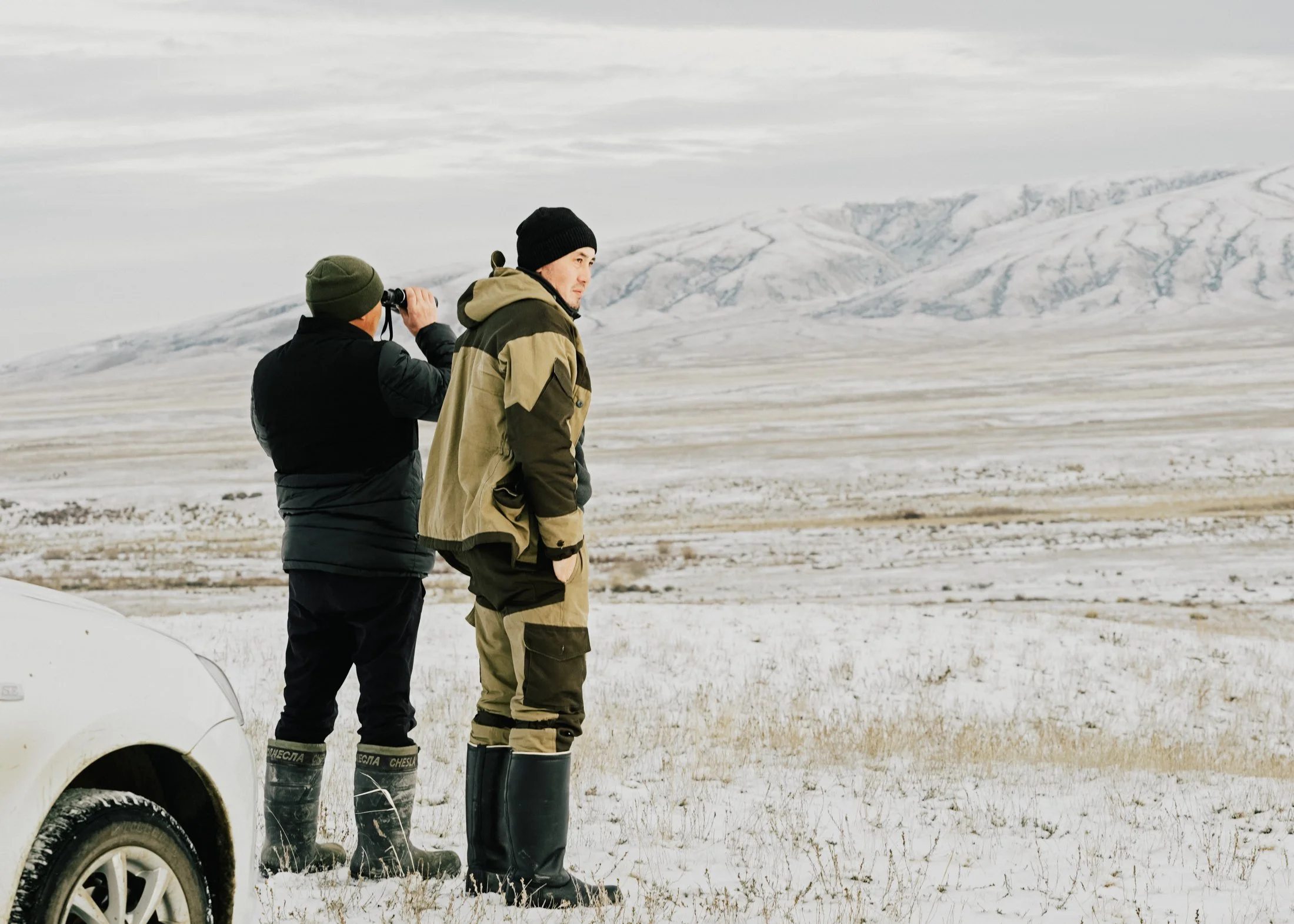
I was planning my trip to Kazakhstan, Mongolia, and China, aiming to visit the unique regions of the Altay Mountains to document the local people's connection to horses. While organizing my journey, I picked up the phone to call my brother, sharing my concerns and fears about traveling so far from where my family lives.
He reassured me, saying, "Just come. Don't worry so much, everything will be fine." He added, "Remember, I took care of you when you were a baby, even when I was still a kid. I skipped a year of school so our parents could work and support us." Then he laughed and said, "I even changed your diapers and fed you every day. This trip won't be more difficult than that."
I planned the first part of my trip for four weeks, flying from Munich, Germany, to Almaty, Kazakhstan. Saying goodbye to my kids and husband was difficult. Leaving them behind, I carried a sense of guilt with me as I embarked on my 12-hour journey.
After two days of rest, we set off for Akhzhar, near the Altay Mountains in Kazakhstan. After driving for almost 600 kilometers, my brother warned me that the most challenging part of the journey was about to begin. For the next 300 kilometers, we would be navigating a rough, bumpy, dirt road. It was impossible to sit comfortably – every moment was filled with jarring
bumps and discomfort. As night fell, a deep fog enveloped the road, and horses or cows often appeared unexpectedly in the middle of the path. We drove cautiously, alert to the shapes emerging through the fog. I clung to the handrail above the car window and braced my right leg against the interior to stay steady. After 15 hours on the road, my right arm and leg were aching and cramped.
It was nearly 1 a.m. when we arrived, but our uncle and aunt were still awake and greeted us warmly with a delicious meal they had prepared. Two of their grandchildren were also awake, their excitement evident. The lively conversation and the tasty Kazakh dish, Beshbarmak, quickly made us forget the hardships of our journey.
As we chatted, the children were chasing a small mouse around corner of their kitchen, affectionately referred to as one of their "pets", like in the Swedish tale Pettson and Findus, which I found cute, or at least I thought I found cute and funny at that moment. As I prepared for bed, I couldn’t help but worry that the little mouse might find its way into my bedding during the night.
We woke up to a stunning morning bathed in sunlight, even as the low fog still lingered. I suggested to my cousin that we head out to see the horses so I could take some photos. I quickly learned an important lesson: if the horses don’t know you, they will turn away and walk off.
In the worst case, the herd’s leader – the only male horse – might approach with a certain amount of aggression, or even attack.
Despite the fact that these horses belonged to my cousin, on the first day, I could only photograph them from behind as they avoided facing me. We decided that I would spend some time walking around with my cousin to get to know the horses and allow them to become familiar with me, hoping to build enough trust for a better photographic opportunity on my second attempt.
Three days into our staying, my brother suggested that we venture to a place he described as the "Haven of Kazakhstan." He promised that this region, renowned for its stunning landscapes, would offer plentiful opportunities to see and photograph more horses. While I was keen to remain in the village for at least ten days to deepen my understanding of the local people and surroundings, I couldn't refuse my brother's suggestion. His enthusiasm was contagious, and I was intrigued by the promise of this haven.
Our journey took us across 600 kilometers … to a hotel where my brother eagerly anticipated a refreshing shower. After a brief respite, we continued another 300 kilometers to Rahman Lake, nestled atop the mountains. The destination was indeed beautiful – serene landscapes, delectable food, and a cozy hotel. However, despite being the end of the year, the region uncharacteristically lacked snow.
More disappointingly, there were no horses in sight.
Moreover, we didn't have any local contacts who could introduce us to horse owners willing to let me photograph their homes and animals. This unexpected turn of events left us at a crossroads, but it also underscored the importance of building connections and immersing oneself fully in the local culture to truly capture its essence.
After some contemplation, I turned to my brother and expressed my resolve. "This isn’t what I’m after. I’m not interested in tourist spots with fancy hotels and good food. My goal is to capture the actual lives of nomads." I added firmly, "I’m not leaving without the photographs I came for."
He sighed and replied, "I'm sorry, but I can't go back to that village. I don’t know how you can do that but it's a tough place to stay, and I just can't see myself enduring another week or two there."
Understanding his perspective, I proposed a compromise. "It's fine," I said. "Let's drive together to Oskemen one of the biggest cities in Kazakhstan, which is 600 kilometers from Rahman Lake. From there, I'll take a local taxi back to the village."
This plan allowed us both to move forward – me with my mission to capture the essence of the local culture, and my brother returning to Almaty to his comfortable apartment.
The trip back to the village took another 550 kilometers in a local taxi. Upon my arrival, the family welcomed me again with warm hugs, for which I was very grateful.
On the second morning, I awoke to an exhilarating sight: snow was finally falling. Filled with excitement, I rose at 4 a.m. and ventured outside with my camera to capture the sunrise. In eastern Kazakhstan, the sun rises very early, the result being the village people start their daily routines at the break of dawn.
Later, as we gathered around the breakfast table, my cousin turned to me and asked, "Do you want to join me? I’m heading out to catch ten horse foals and bring them back to our stable. If we don’t, they’ll likely become prey for the hungry wolves within a week."
This unexpected opportunity thrilled me. Finally, I could capture some action moments with the horses and the nomads.
We packed our gear and hit the road in his old Gazelle. Upon arriving, we met a man around 75 years old with his grandson who my cousin said would help us. Our task was to round up a packs of horses – around 25 females, 1 males, and 10 foals – and drive them to the outdoor stable to separate the foals from their parents.
We needed to keep the big car near the stable while we chased the horses with a smaller UAZ-452, a type of Russian jeep owned by the elderly gentleman. As we started our adventure, I realized I had underestimated his strength. He drove with remarkable skill, not losing a single horse from the pack, as if he had done this a thousand times before. If not more.
As we arrived to the outdoor stable, they took their ropes in hand and began chasing the foals. I found the scene thrilling as I darted around the corners of the stone stable, trying to avoid provoking the larger horses while capturing the action on camera. However, as soon as they caught the first foal, my excitement shifted to concern. Isaw the fear in the eyes of the young horses. Once caught, my cousin tugged on the ropes, pulling the foals towards a narrow passageway framed with metal, made to contain them before loading then to the big car.
The procedure was so heartbreaking that after a few foals were caught, a sudden wave of sadness shivered through me, and I started to weep like a child. I saw the pain in their eyes and heard the dreadful sounds they made as the ropes tightened around their necks. Some foals came close, staring at me as if pleading for help.
For a few moments, I couldn’t lift my camera; tears streamed down my face. I wished I could speak their language so that I could explain this wasn’t a threat to them but a means to protect them from wolves.
After collecting myself, I set my emotions aside and resumed my work. The process repeated until all ten foals were caught and lined up near the stable before being loaded into the car.
It was hard work for everyone, but especially for the foals, who were understandably stubborn and confused, not knowing what was happening and having no chance to say goodbye to their parents, particularly their mothers. The mother horses, sensing their distress,approached the area, neighing and pawing at the ground with one leg.
The old man’s grandson, only nine years old, displayed remarkable passion and fearlessness. With his small hands and body, he was constantly pulling and pushing, fully involved in the task. After seven hours of chasing foals, they were all sweating, while I was freezing despite wearing two layers of down jackets, three layers of pants, and wool socks. The -25°C cold was relentless.
Finally, all the foals were in the car, but the car's battery had frozen, and it wouldn’t start. We waited for a friend of my cousin to come and help jumpstart the car. At the end of the day, we headed home with our foals, cold and hungry but relieved to have completed the task.
While we were in the car, my cousin said, “I saw you crying earlier. Are you okay?”
I replied, “Yeah, it was just difficult for me to see them suffering and getting separated from their mothers. They’re still babies, you know.”
He responded, “You might think it’s normal for us to do this, but I suffer inside each time we have to separate them. The system with this outdoor stable isn’t good. I have the perfect idea to build something that makes it easier for all of us, but I don’t have the money for it yet.” He sighed.
We both fell silent, listening to the sound of the snowstorm outside.
I spent a few more days in the village, and one afternoon while we were having tea, a neighbor came by and asked my cousin for help with slaughtering a horse for their winter meal. Due to the extreme cold, it’s a tradition there to eat horse meat to stay warm, and drink mare's milk to keep cool in the summer.
It was a major event, and I resolved to control my emotions and not cry in front of everyone. This time, the horse was a particularly wild male. It was kept in the stable, and they used ropes to pull it outside. About six men struggled to subdue the animal, and its sheer strength made the process quite prolonged.
During this, my cousin’s six-year-old daughter was standing nearby, watching intently. I was concerned and asked if she was alright. She calmly replied that she was used to it and wanted to see it. I was surprised by her composure, but I recognized that this was their way of life and tradition. Although the act might seem harsh to those of us from different backgrounds, it is important to respect their cultural practices. There is no universal standard for what is better or worse — only a need for mutual respect for different ways of life.
During a local taxi ride to the Oskemen train station for our journey back to Almaty, I was accompanied by my cousin, who was planning to meet some friends there. The road was frozen, and the driver kept urging us to pray so we wouldn’t get stuck, as the temperature was around -30°C.
By the time we arrived, the temperature had plummeted to -35°C. Despite warnings about the dangers of staying out in such extreme cold, I was determined to photograph the big river, which was shrouded in thick steam. This decision, however, came at a cost. Shortly after boarding the train, I developed a high fever and severe leg pains. Though I managed to capture the images I wanted, I spent the rest of the trip to Almaty bedridden.
Upon arriving in Almaty, my brother picked us up and took us to my mother’s place. Shivering with fever and dealing with a runny nose, I finally found solace in my own bed and my mother’s comforting food. It took a few days to recover, but eventually, I was well enough to make my way back to Munich.
